←
All field notes
K9 & Specialty
Officer Safety
Designing a K9 Vehicle Around the Dog
Heat alarms, remote door pops, and insert geometry — a K9 build is a life-support system with a patrol vehicle wrapped around it.
Guardian Build Team
K9 & Specialty Units
8 min read
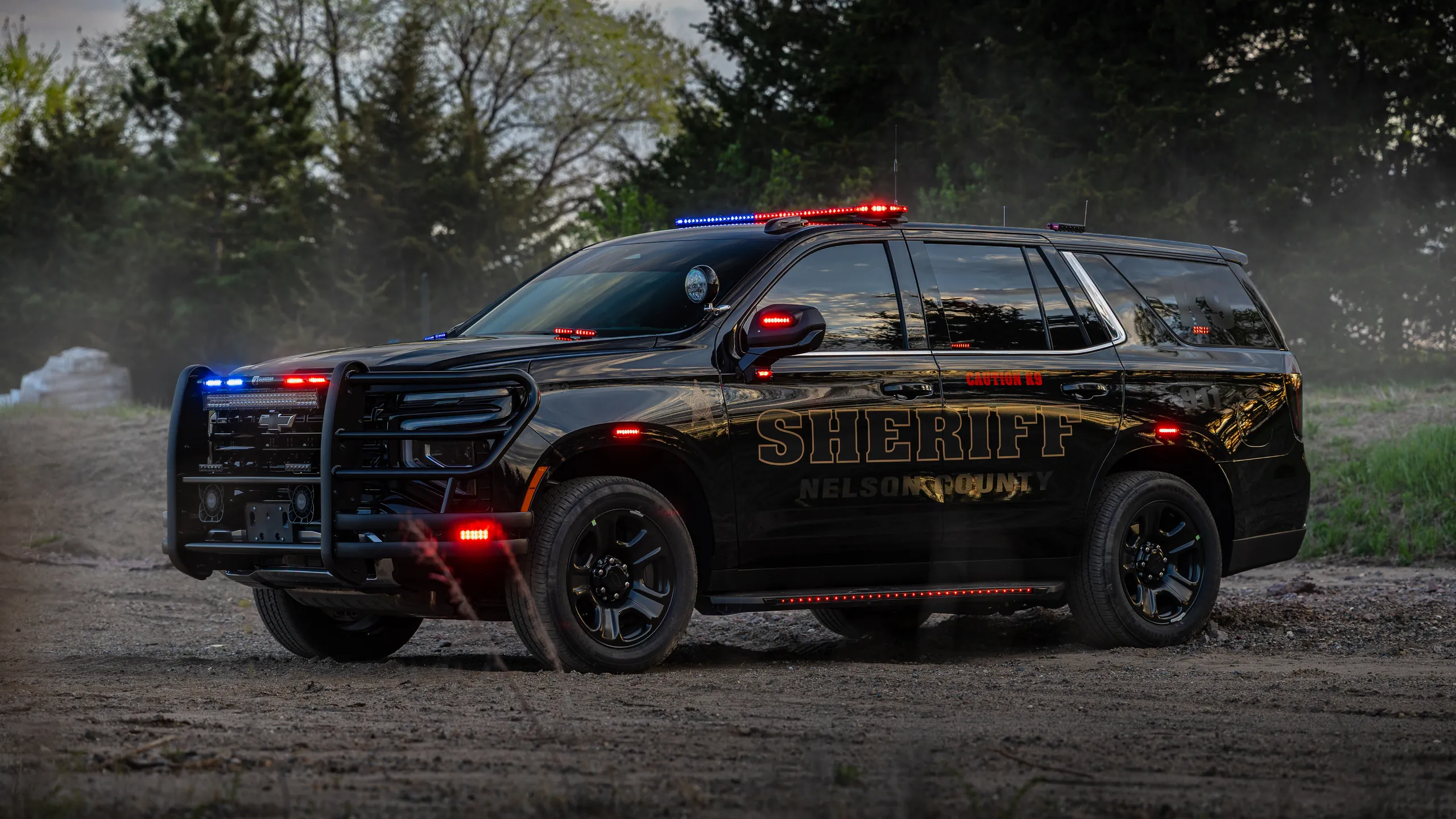
A K9 unit is the only patrol vehicle carrying a partner who cannot open a door, call for help, or tell anyone the air conditioning has failed.
The Systems That Have to Work
Temperature monitoring with an audible alarm, a pager to the handler, automatic window drop and fan activation, and a remote door release that works from a traffic stop fifty feet away. None of these are accessories. They are the reason the vehicle exists.
The insert itself is a design problem: enough room for the dog to turn and lie down, a floor that drains and cleans, and a barrier that protects the dog in a rear impact without turning the cargo area into a drum.
Handler Ergonomics
We build around how the handler actually works — where the leash lives, which door the dog deploys from, and how much cargo space is left once the insert is in. Guardian builds K9 vehicles across patrol, sheriff, and conservation fleets throughout the Midwest.
Heat Is the Whole Problem
Every other consideration in a K9 build is secondary to temperature. The dog cannot open a door, cannot call for help, and cannot tell anyone the air conditioning has quit while the handler is fifty feet away on a traffic stop.
Continuous temperature monitoring inside the compartment
An audible alarm at the vehicle
A pager alert direct to the handler
Automatic window drop when temperature rises
Automatic fan activation
Remote door release the handler can trigger from a distance
These systems are not accessories bolted onto a patrol vehicle. They are the reason the vehicle exists in this configuration at all, and they get commissioned and tested before delivery rather than explained in a manual.
The Insert Is a Safety System
A K9 insert has to do several jobs that pull against each other. It needs room for the dog to stand, turn and lie down. It needs a floor that drains and cleans without trapping water in the body. And it needs to protect the dog in a rear impact without turning the cargo area into a resonant box on every shift.
Getting that right depends on the chassis. The same insert design that works in one SUV is wrong in another, which is why the compartment is specified against the actual vehicle rather than a category.
Deployment Ergonomics
We build around how the handler actually works: which door the dog deploys from, where the leash lives, how the handler reaches the release under pressure, and how much cargo space survives once the compartment is in.
That last point is where K9 builds most often disappoint. A department gets the compartment it wanted and discovers there is nowhere left for the gear the unit carries every day. Planning the storage and the insert together avoids the surprise.
Cleaning and Service Life
A K9 vehicle gets washed out more often than any other unit in the fleet. Materials, drainage and the routing of every electrical run have to assume regular water, because a compartment that cannot be cleaned properly will not be cleaned properly. Guardian builds K9 units across patrol, sheriff and conservation fleets throughout the Midwest, and the ones that age well are the ones designed for that reality on day one.
MORE FROM THE FIELD

PLANNING YOUR NEXT BUILD
Let’s map the build sheet before the order lands.
Tell us what your fleet needs to do this year. We will plan the vehicles, equipment and timeline around it.