←
All field notes
Upfitting
Fleet Planning
Should Your Department Hire Its Own Upfitter — or Partner with a Specialized Builder?
In-house upfitting promises control. A specialist promises consistency. Here is how the tradeoffs actually play out, and how to decide.
Guardian's Former Officers
Public Safety Upfitting
9 min read
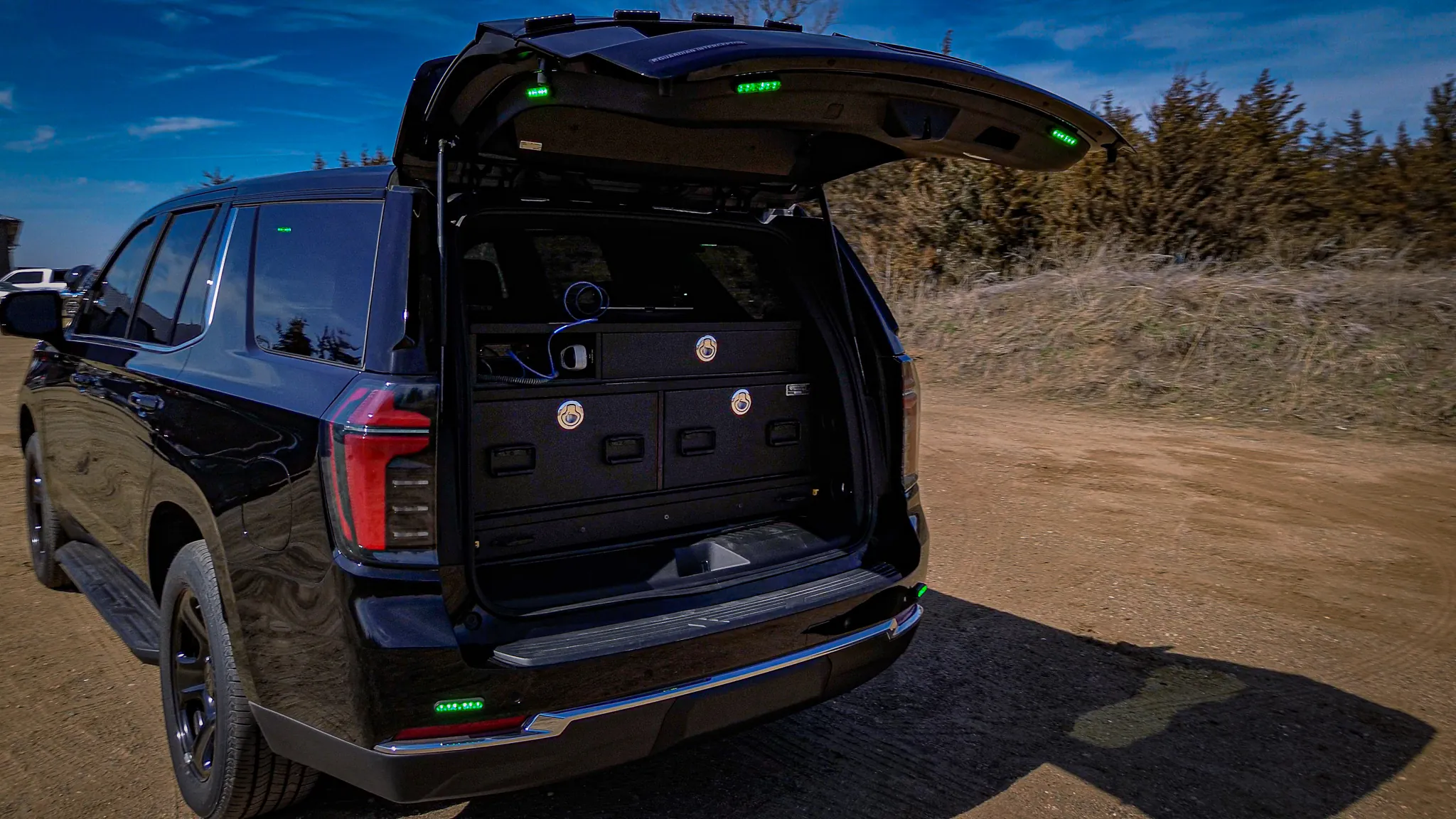
When a law enforcement agency considers managing its own fleet, one of the most critical decisions is this: do we build vehicles in-house, or outsource to a public-safety upfit specialist?
It is not a trivial choice. Vehicles are no longer just marked cars — they are high-tech mobile offices, evidence platforms, communications nodes, and officer safety tools. Choosing the wrong path can mean downtime, rework, inconsistent quality, or hidden costs.
Below we walk the pros, cons, and real-world lessons from both models — with data, case examples, and guidance on when one option is clearly preferable.
The Landscape: Why This Question Matters
As vehicles pack in more technology — LTE routers, body cams, radar, ALPR, evidence capture, network wiring, lighting, armor, consoles — the domain of a “vehicle upfitter” has become highly specialized.
A 2024 analysis, “Fit to Serve: Weighing Outsourced and In-House Police Vehicle Upfitting,” notes that many hurdles in in-house upfitting stem from a lack of specialized technical staff, evolving vehicle architectures, and the complexity of integrating multiple systems (Government Fleet).
Government Fleet also outlines the key tradeoffs in “Police Vehicle Upfitting: In-House or Outsource?” — size, staffing, regulation, and the vendor ecosystem all come into play in deciding which route is viable (Government Fleet).
In short: it is not just about cost per vehicle. It is about consistency, risk management, scalability, and trust.
Pros & Cons: In-House Upfitting
Strengths of doing your own builds
Direct control and flexibility. When your techs are in your building, you can respond to urgent needs, make last-minute tweaks, and schedule priority vehicles with fewer layers of coordination.
Institutional knowledge and alignment. Over time your team learns exactly how your department wants consoles, switches, wiring layout, and interfaces — eliminating guesswork and miscommunication.
Perceived lower cost using existing labor. Because the staff are already on payroll, overtime or internal time can feel less expensive on paper — though this often understates training, tools, rework, and opportunity cost.
Better in low-volume or simple setups. For small departments with straightforward needs — basic lights, radio, minimal tech — a skilled in-house tech might reliably handle the work without the burden of coordinating with an external vendor.
Challenges and risks to watch
Hiring and training specialized talent. The level of knowledge required is high: CAN bus, data wiring, EMI/RFI, ECU integrations, computer programming, certifications, ground schemes, OEM modification guides, airbag zones, and more. Not many general fleet techs have that depth, and Fit to Serve cites it as a core barrier departments face when attempting to self-upfit.
Quality consistency and rework. Without volume and repeated standardized processes, variation creeps in. A wiring harness installed incorrectly or a broken ground can cost hours of diagnosis. At scale, even 2–3% rework is expensive. With parts supply chains longer than ever, a component broken by an inexperienced installer can mean months of downtime waiting on a replacement.
Capacity constraints and surge risk. If your department suddenly receives a large grant or needs many vehicles at once, your in-house shop may be overwhelmed. Government Fleet recounts how Collier County, FL outsourced almost all upfits because their small staff could not keep up with complexity and volume (Government Fleet).
Documentation, warranty, and accountability. OEM modifier guides demand precise records. If an airbag zone is impacted or a wiring fault causes a failure, legal and liability exposure increases. Without a disciplined quality management system, things slip.
Hidden costs. Tools, jigs, test benches, spare parts, certifications such as MECP, and ongoing training all add up. Internal “labor cost” routinely understates the true burden.
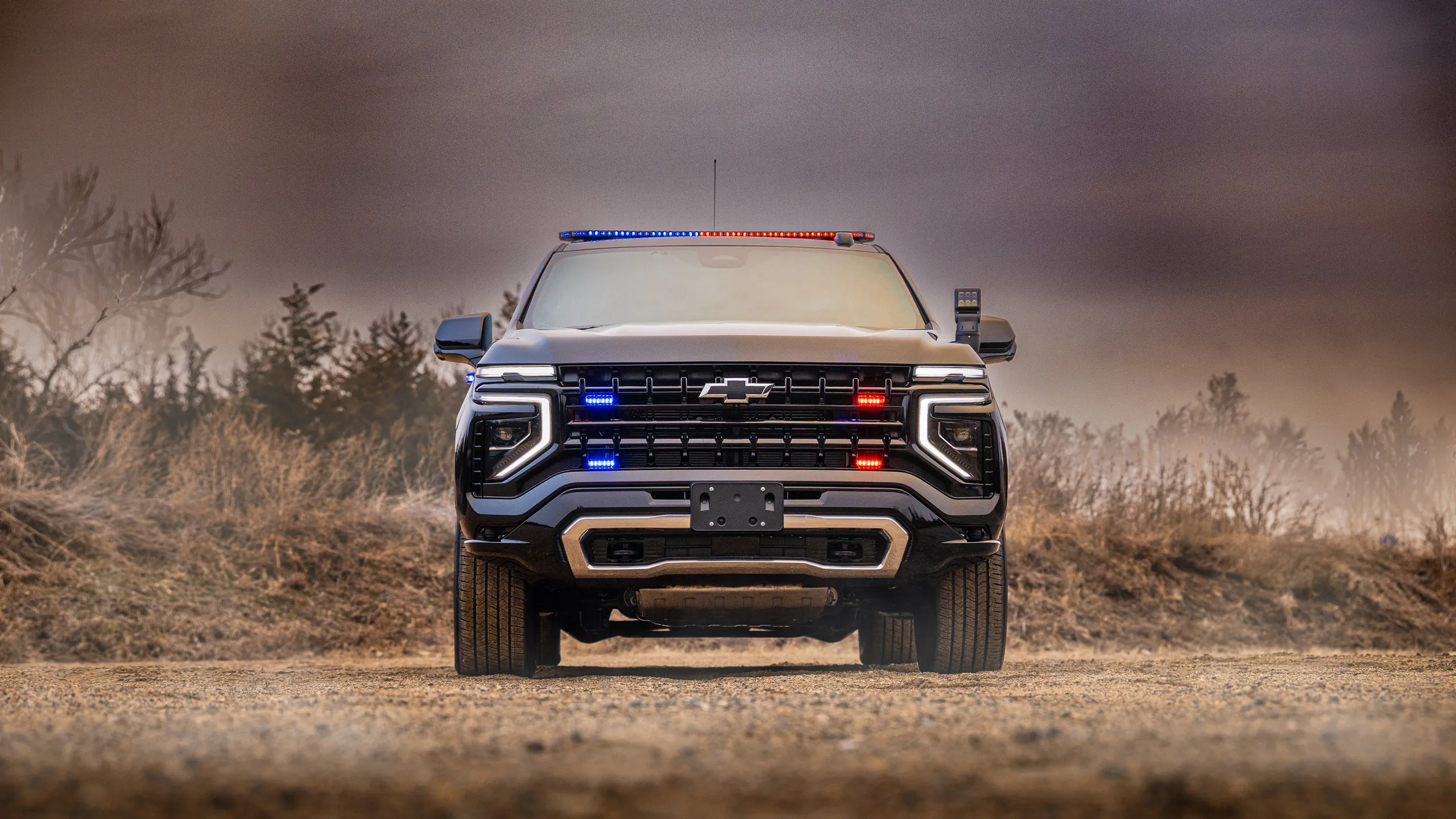

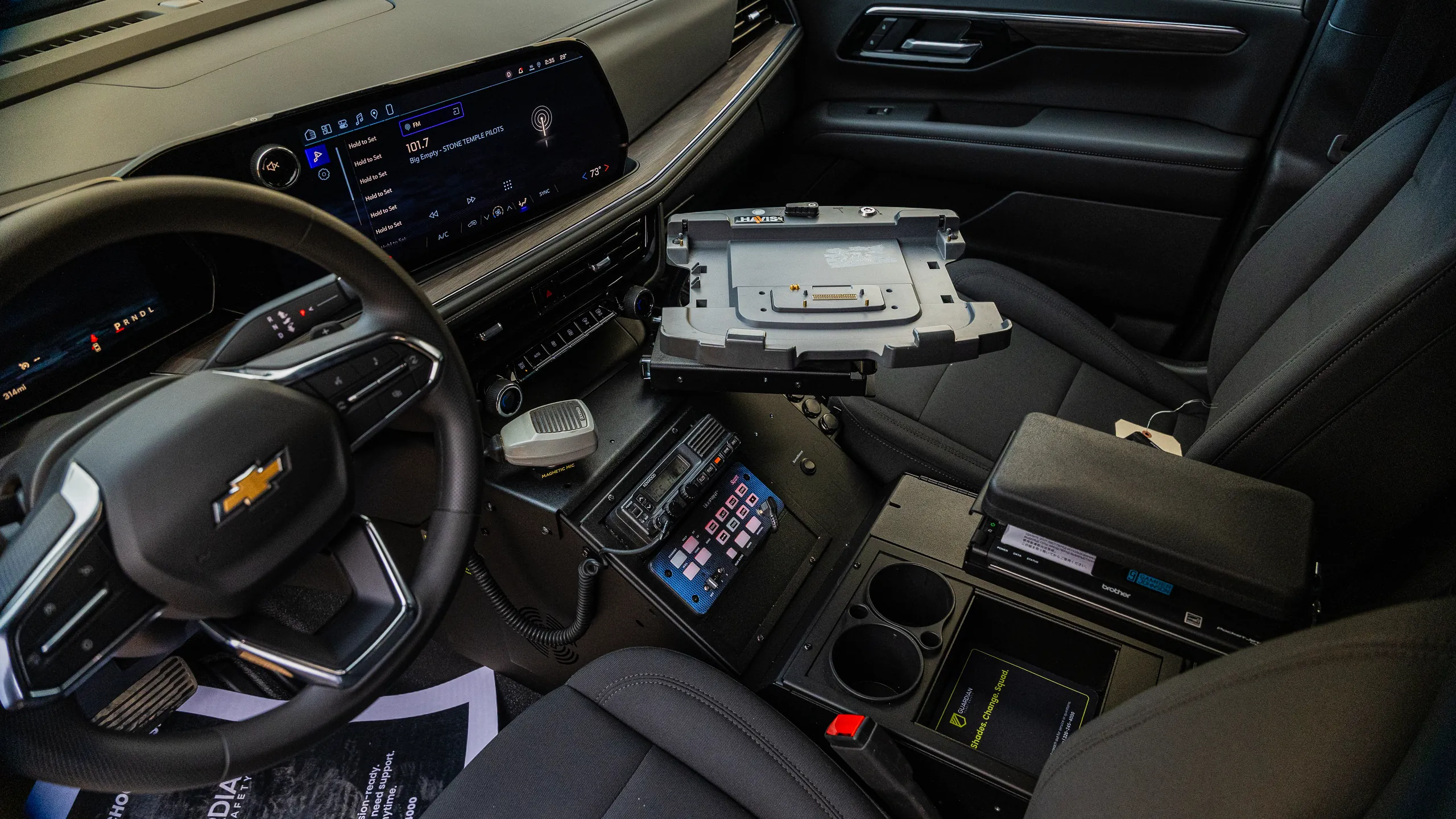
Inside a Guardian build: console and switch panel, rear equipment layout, and finished exterior.
Pros & Cons: Outsourcing to a Specialized Upfitter
Advantages that lean toward the specialist model
Deep, multi-discipline expertise. A quality upfitter lives this work every day — computer programming, router configuration, wiring, lighting, data, armor, consoles, graphics. They are intimately familiar with the tradeoffs and the pitfalls. Police1’s piece on why a total vehicle solution makes good sense underscores how integrated builds reduce compatibility issues and speed installs (Police1).
Consistency, speed, and throughput. With templates, repeatable processes, parts libraries, and quality systems, upfitters deliver predictable results and compress lead times.
Shared R&D, vendor relationships, and tooling economies. Upfitters stock parts, maintain relationships with lighting, radio, and radar vendors that earn better pricing, stay current with new vehicle architectures, and amortize tooling across many customers. That specialization scales better than spreading the same cost across one internal shop.
Lower management overhead. One contract, one point of contact, single warranty coverage, and fewer POs or handoffs — which reduces the administrative burden on your fleet and procurement teams.
Risks and tradeoffs to mitigate
Vendor backlog or quality variance. A poor partner can create delays, which is why selection criteria matter: transparency, capacity, warranties, references, and rework policies. Fit to Serve notes that aligning build schedules and vendor communication is key to mitigating downtime.
Dependence and loss of internal traction. Relying fully on external partners may diminish internal capability and put you at risk if the vendor changes business models or priorities.
Perceived higher cost. Outsourcing sometimes reads higher than internal labor, especially where internal labor is hidden or subsidized. But life-cycle costs — downtime, rework, quality failures — often flip the math.
Real-World Examples & Lessons
Collier County, FL. With a fleet of over 1,000 vehicles and roughly 450 patrol units, Collier’s fleet manager decided to send new upfits 100% to a local vendor because internal staff could not keep up with complexity and volume. Small updates stayed in-house; new full builds went out (Government Fleet).
Florida Highway Patrol. FHP built a central installation facility near Jacksonville, staffed with 12 technicians and support personnel, processing roughly 12 vehicles weekly. Their argument: for the volume and complexity of a statewide fleet, a centralized in-house model made sense (Police Magazine).
City of Orange, CA. Their fleet team transitioned to outsourcing new patrol builds. The cost and labor of scaling internal capability to meet modern upfit demands exceeded their capacity, so they handed it to local vendors they vetted (Police Magazine).
The hybrid case. One Government Fleet case study reported average savings of 33% by keeping selected work in-house rather than outsourcing it — but in a controlled environment, and not across the full upfit scope. It underscores that hybrid models can make sense (Government Fleet).
Best Practices & How to Decide
Before choosing a model, walk your department through the five factors below. The answers usually make the right path obvious.
Decision Factor | Key Questions | What to Watch For |
|---|---|---|
Annual volume & surge capacity | How many patrol builds per year? What happens if you land a large grant? | Whether your shop can scale quickly without major capital investment. |
Complexity & internal skill base | Are builds simple (lights and radio) or loaded (cameras, radar, data networks)? Do you already have certified electronics techs, wiring experts, and QA processes? | More complexity pushes toward outsourcing. Without that bench, the training curve is steep and risky. |
Consistency & risk | Can you guarantee that every vehicle functions identically? | Variation leads to training errors and officer frustration. |
Costing discipline | Are you capturing the full true cost — tools, training, rework, downtime? | Internal cost models routinely underestimate all four. |
Contract & warranty controls | Do you have strong vendor contracts covering warranty, rework policy, and accountability? | Contractual clarity is what prevents surprises. |
How Guardian’s Model Leverages the Best of Both Worlds
Depth of specialty expertise. As a dedicated upfitter, Guardian maintains staff across every discipline — computers, camera systems, wiring, communications, radar, graphics, armor — so your agency does not have to.
Consistency at scale. We deploy standardized build sheets, quality checklists, torque specs, and documentation so every vehicle meets spec, year after year.
Transparency and accountability. Clear warranties, build documentation, rework policies, and test checkoffs keep us accountable.
Vendor relationships mean cost advantage. High-volume purchasing with partners like Motorola, Whelen, and Stalker Radar secures better pricing and faster parts access than a single department can get on its own.
Collaboration, not replacement. We see ourselves as a partner, not a vendor. We support knowledge transfer, share build standards, and integrate with your procurement and fleet systems.
Turnaround speed. Because we focus exclusively on public safety builds, we optimize queue, inventory, and process flow for short lead times.
Final Thoughts
There is no one-size-fits-all answer. A small rural agency with predictable, lean build needs might pull off in-house upfits without a hitch. But as your fleet grows, as policing technology gets more complex, and as consistency becomes mission-critical, the scales tend to tip toward specialized builders.
The real question is not “is it cheaper?” It is “is it safer, more consistent, and lower risk?”
If those answers point toward partnering with a specialized upfitter like Guardian, then you have positioned your department to serve officers — and the community — with confidence and reliability.
MORE FROM THE FIELD

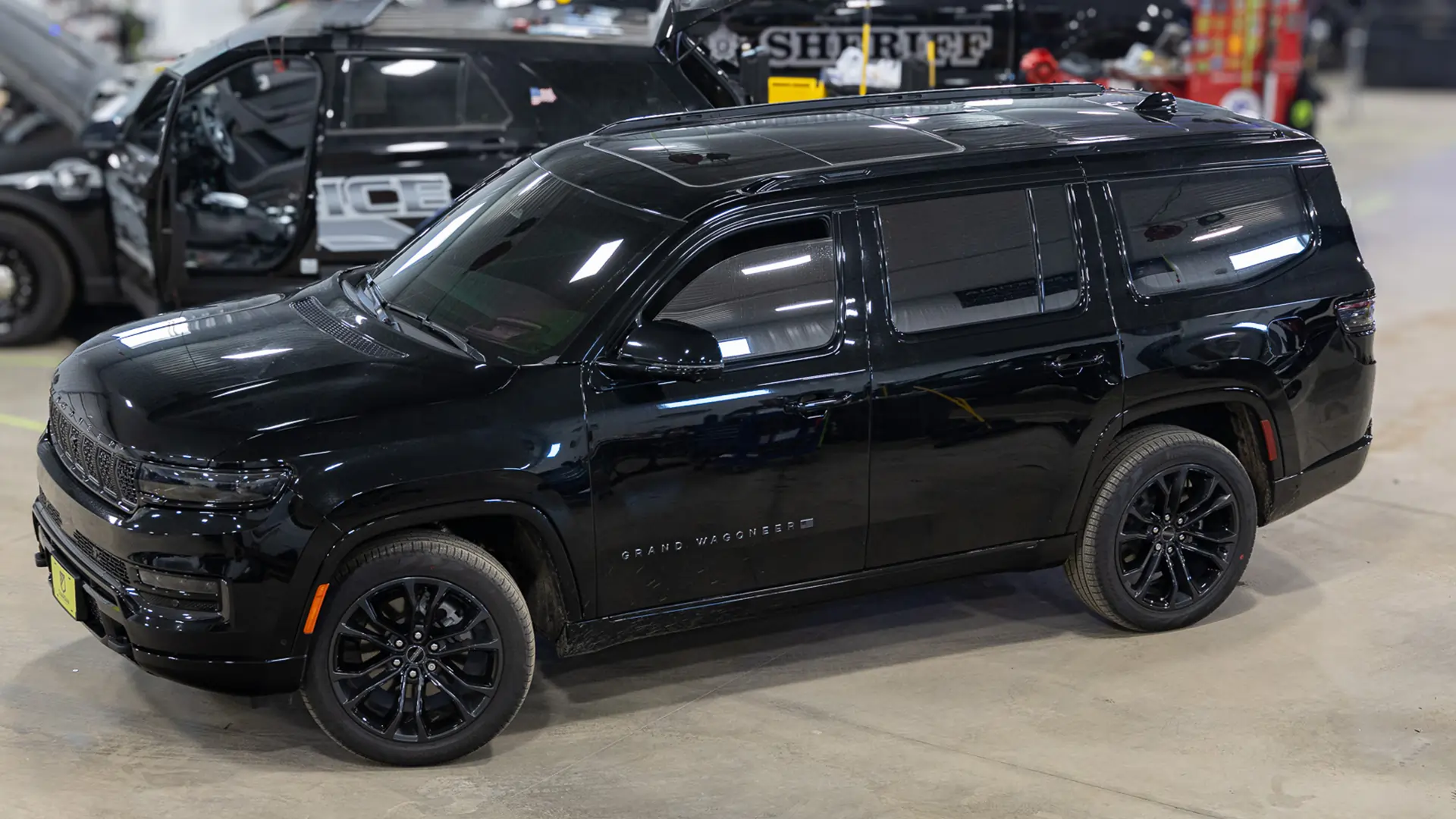
PLANNING YOUR NEXT BUILD
Let’s map the build sheet before the order lands.
Tell us what your fleet needs to do this year. We will plan the vehicles, equipment and timeline around it.