←
All field notes
Fleet Planning
The Lowest Police Vehicle Upfit Quote Isn’t Always the Lowest Cost
A lower police vehicle upfit quote can look like a win. Learn how downtime, delays, transportation and staff time can affect total fleet cost.
Guardian Fleet Safety
Public Safety Vehicle Upfitting Experts
7 min read
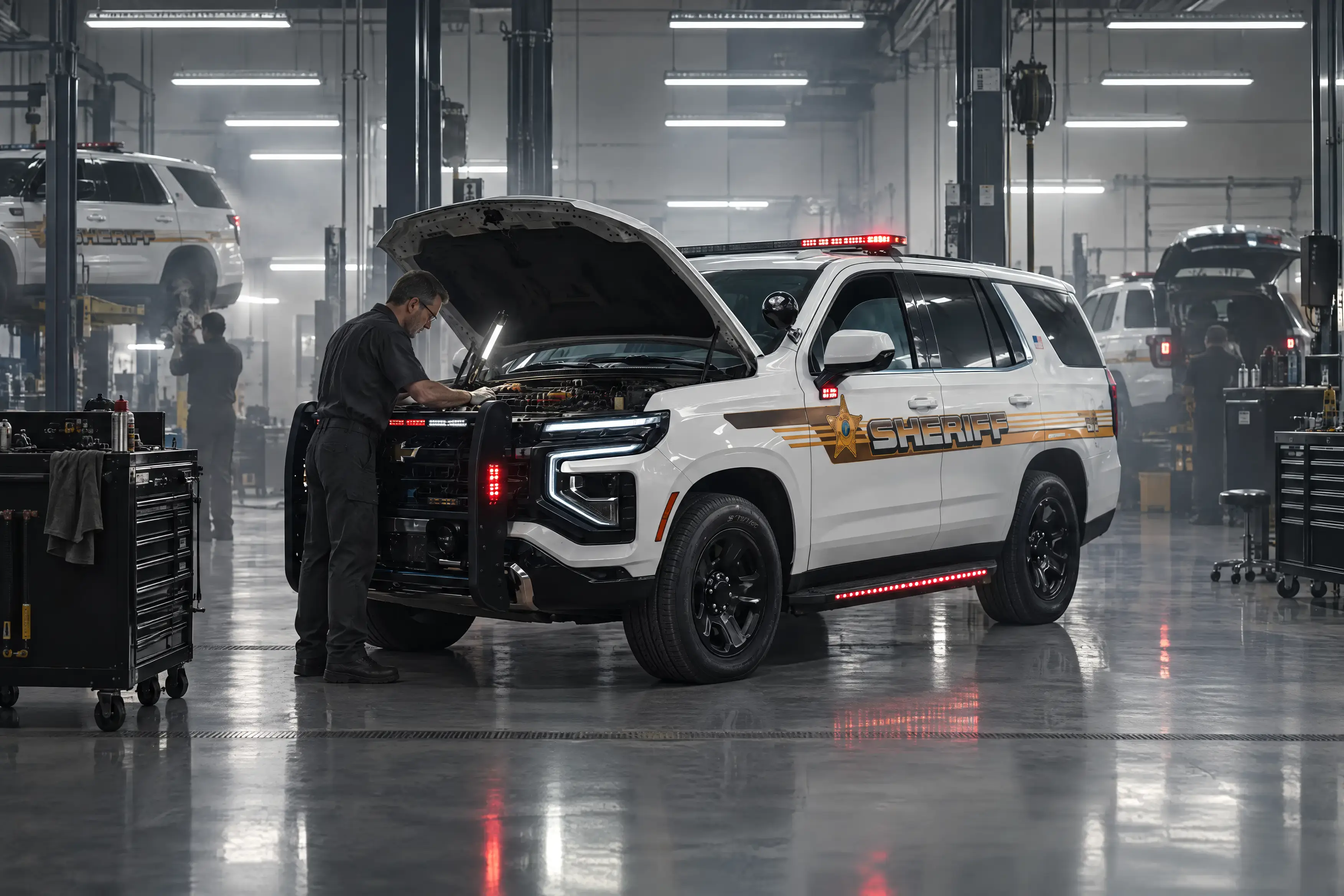
The Lowest Police Vehicle Upfit Quote Isn’t Always the Lowest Cost
A lower price upfront can feel like a win. But the number at the bottom of an upfit quote doesn’t always tell you what the vehicle will cost your department over its service life.
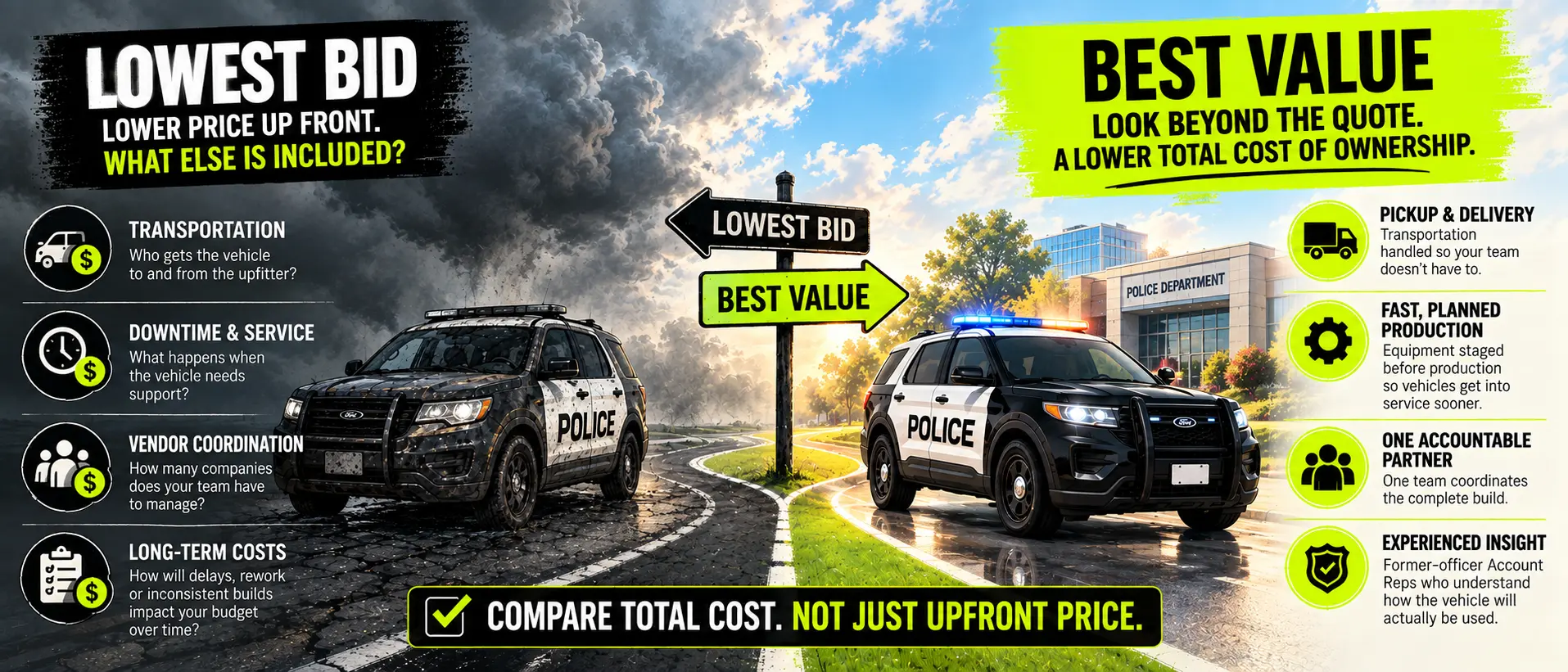
A lower police vehicle upfitting quote can absolutely be the right choice.
But price alone doesn’t tell the whole story.
The real cost of a police vehicle includes more than equipment and installation. Departments also have to consider how quickly the vehicle gets into service, how much staff time is spent coordinating the build, how often the vehicle is unavailable, and what happens when it needs service later.
Guardian founder and CEO Charles Teigen draws on both his law enforcement background and years of working directly with agencies on public safety vehicle planning. That perspective shapes how Guardian looks at the true cost of a vehicle, not just the number on the quote.
That’s why the better question isn’t always:
“Which quote is cheaper?”
It may be:
“Which option gives our department the best value over the life of the vehicle?”
Police Vehicle Cost Goes Beyond the Original Quote
Fleet managers already know this principle.
The U.S. Government Accountability Office identifies life-cycle cost analysis as a leading fleet-management practice. GAO has also found that organizations can overlook indirect fleet expenses, including personnel costs associated with managing vehicles. Government Accountability Office
Those indirect costs matter in law enforcement because a vehicle affects more than a balance sheet.
It affects officer time, fleet availability and the department’s ability to put resources where they are needed.
1. Vehicle Downtime Has a Cost
Every police vehicle will need maintenance during its life.
Mechanical repairs, preventative maintenance, collision repairs and normal wear have nothing to do with the upfitter. Some downtime is simply part of operating a fleet.
The goal should be to avoid adding unnecessary downtime on top of it.
When an upfit-related issue requires a vehicle to leave service, the department may also spend time:
Diagnosing the issue
Coordinating service
Transporting the vehicle
Moving equipment or officers to another squad
Picking the vehicle back up
Managing schedules around its absence
Those costs can be difficult to see because they rarely appear on the original purchase order.
Government Fleet documented one large police-fleet operation where preventive-maintenance visits had been taking as long as 10 days, while police upfits averaged approximately 85 labor hours per vehicle before the organization began analyzing and improving its processes. Government Fleet
The lesson isn’t that every department will experience those numbers.
It’s that time is a fleet expense too.
2. A Vehicle Waiting to Be Built Is Still Costing the Department
When a replacement squad is delayed, the work doesn’t stop.
The department may have to keep an aging vehicle in service longer, continue spending money on maintenance or shuffle vehicles across officers and assignments.
This is why production planning matters.
In Fayetteville, North Carolina, Government Fleet reported that the city’s previous upfitter could take as long as nine months on an individual build. After changing its process and bringing in additional upfitting support, one outside upfitter completed nine patrol vehicles in roughly two and a half weeks—about one vehicle every two days. Government Fleet
Another Government Fleet report describes the Florida Highway Patrol preassembling equipment such as consoles and partitions before vehicles arrive so the final installation becomes much closer to a “plug-and-play” process. Government Fleet
The principle is simple:
A fast build usually starts long before the vehicle enters the shop.
At Guardian, vehicles are planned and equipment is staged before production begins so the vehicle can be built fast once everything is ready.
A typical fully staged Guardian vehicle spends approximately 2–3 days in production before moving through the inspection and delivery process.
3. Transportation Uses People, Not Just Fuel
Getting a police vehicle to and from an upfitter sounds like a small part of the process.
But someone has to do it.
If the department is responsible for transportation, that may mean assigning one or more employees to drive vehicles, coordinating return transportation, paying mileage or fuel and taking personnel away from their normal responsibilities.
That is why Guardian provides pickup and delivery.
Instead of asking an officer, administrator or fleet employee to manage the trip, Guardian handles the transportation as part of the relationship.
It removes one more task from the department’s plate—and one more cost that may never have appeared on the upfit quote.
4. Managing Multiple Vendors Takes Time Too
Lighting may come from one company.
Graphics from another.
Tint from another.
Radios, cameras, computers, prisoner transport equipment and specialty equipment may all involve different suppliers or installers.
Someone still has to coordinate all of it.
Guardian approaches police vehicle upfitting as a one-stop process. Lighting, sirens, technology, partitions, graphics, storage and other equipment are planned as one vehicle rather than a collection of unrelated projects.
That gives the department one accountable partner managing the complete build.
Government Fleet has also documented departments choosing outsourced upfitting because of the staffing and time required to manage increasingly complex police vehicles. In one example, outsourcing allowed in-house fleet technicians to stay focused on preventive maintenance and keeping existing vehicles on the road. Government Fleet
5. Planning the Right Build Can Prevent Costly Changes Later
Saving money does not necessarily mean removing equipment.
Sometimes it means making better decisions before production starts.
Which equipment does the officer actually use?
What technology will the department add during the vehicle’s service life?
Can equipment be positioned more effectively?
Can fleet layouts be standardized?
Is there equipment from an existing vehicle that can appropriately be reused?
Those are conversations worth having before a vehicle reaches production.
Guardian Account Representatives come from law enforcement backgrounds, so those conversations are grounded in how officers actually use the vehicle—not simply what fits on a build sheet.
That experience can help departments identify what matters, what doesn’t and what may become important later.
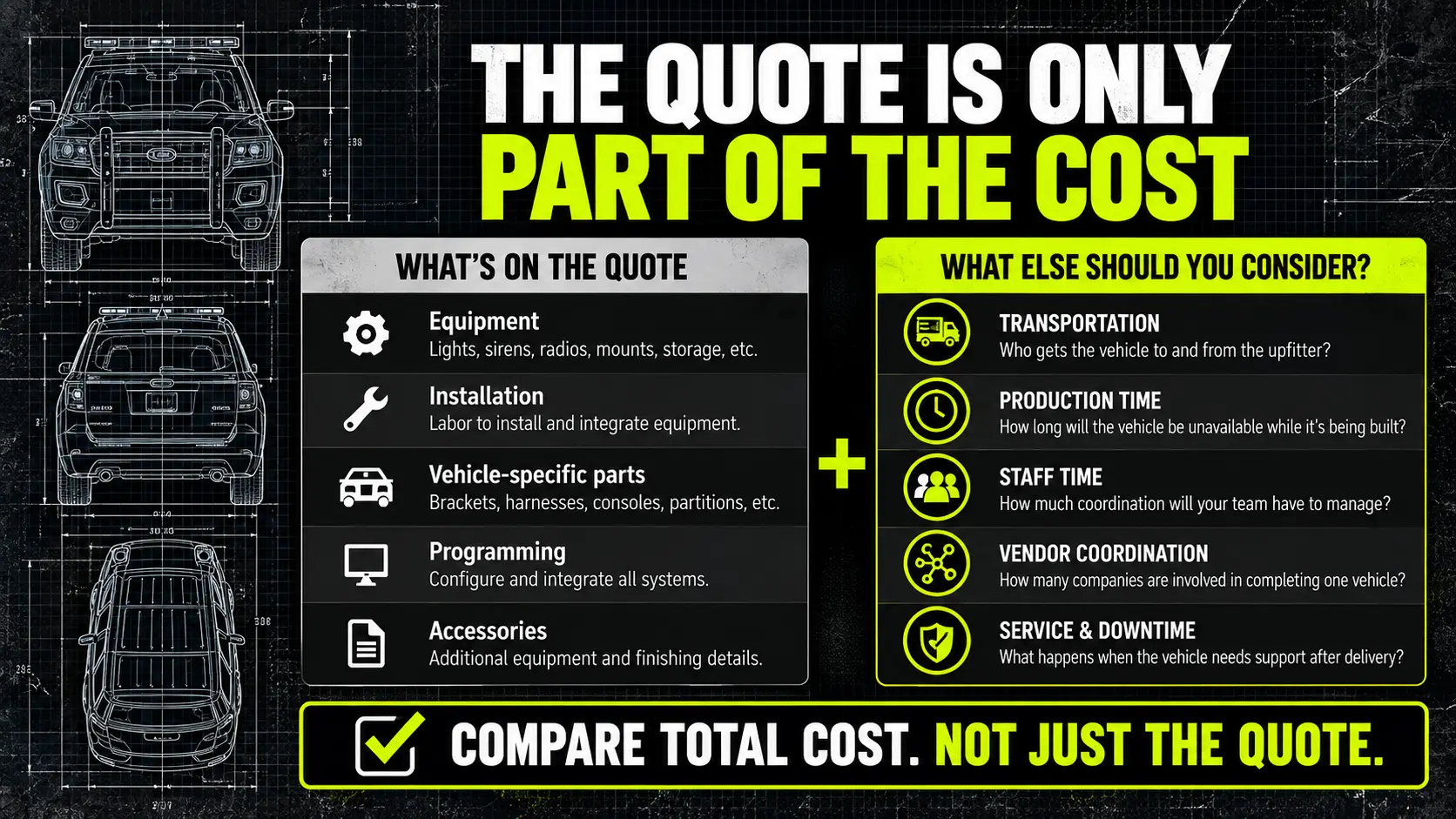
What Should Departments Compare Besides Price?
When evaluating police vehicle upfitters, the quote still matters.
But it shouldn’t be the only thing you compare.
Consider asking:
How long will the vehicle actually be in production?
Is equipment staged before the vehicle arrives?
Who handles pickup and delivery?
How many vendors will our department have to coordinate?
What happens if the vehicle needs service later?
Can service come to our department?
Who helps us plan the vehicle before production?
How consistent will future vehicles be with this build?
What warranty backs the installation?
Who is accountable if something goes wrong?
Those answers can tell you much more about the true cost of the build than the bottom line of the quote alone.
The Lowest Bid and the Best Value Aren’t Always the Same Thing
Charles Teigen has seen this from both sides—first as a law enforcement officer and now after years of working with departments planning and building public-safety vehicles.
A few hundred or even a few thousand dollars saved upfront can look significant.
But departments also live with that vehicle for years.
The more useful calculation is what it costs to build it, manage it, keep it available, service it and eventually replace it.
That is total cost of ownership.
And sometimes the option with the lowest price on day one is not the option with the lowest cost at the end.
How Guardian Approaches the Cost Equation
Guardian Fleet Safety focuses on removing friction that can add cost and time throughout the process.
Pickup & Delivery
Guardian handles transportation so departments don’t have to dedicate officer or staff time to moving vehicles back and forth.
Fast Production
Vehicles are designed, equipment is ordered and the build is staged before production begins so the vehicle can be built fast once everything is ready.
One Accountable Partner
Guardian manages the complete upfit so departments don’t have to coordinate multiple vendors to finish one vehicle.
Former-Officer Account Representatives
Departments work with people who understand law enforcement and can help translate officer needs into a practical vehicle specification.
The goal isn’t simply to build a cheaper vehicle.
It’s to help departments get more value from every vehicle they put on the road.
Final Thought
There will always be pressure to control fleet costs.
There should be.
But responsible fleet spending is about more than finding the lowest number on a quote.
It means looking at the full life of the vehicle—production time, staff time, downtime, service, coordination and the officers who depend on it every shift.
The cheapest quote may save money today.
The right build should keep saving your department time and money for years.
Ready to Compare More Than the Quote?
If your department is planning its next police vehicle or evaluating an existing specification, talk with one of Guardian’s former-officer Account Representatives.
We’ll help you look at the complete build, the process behind it and what it could mean for your fleet long after delivery.
Talk Officer to Officer →
MORE FROM THE FIELD
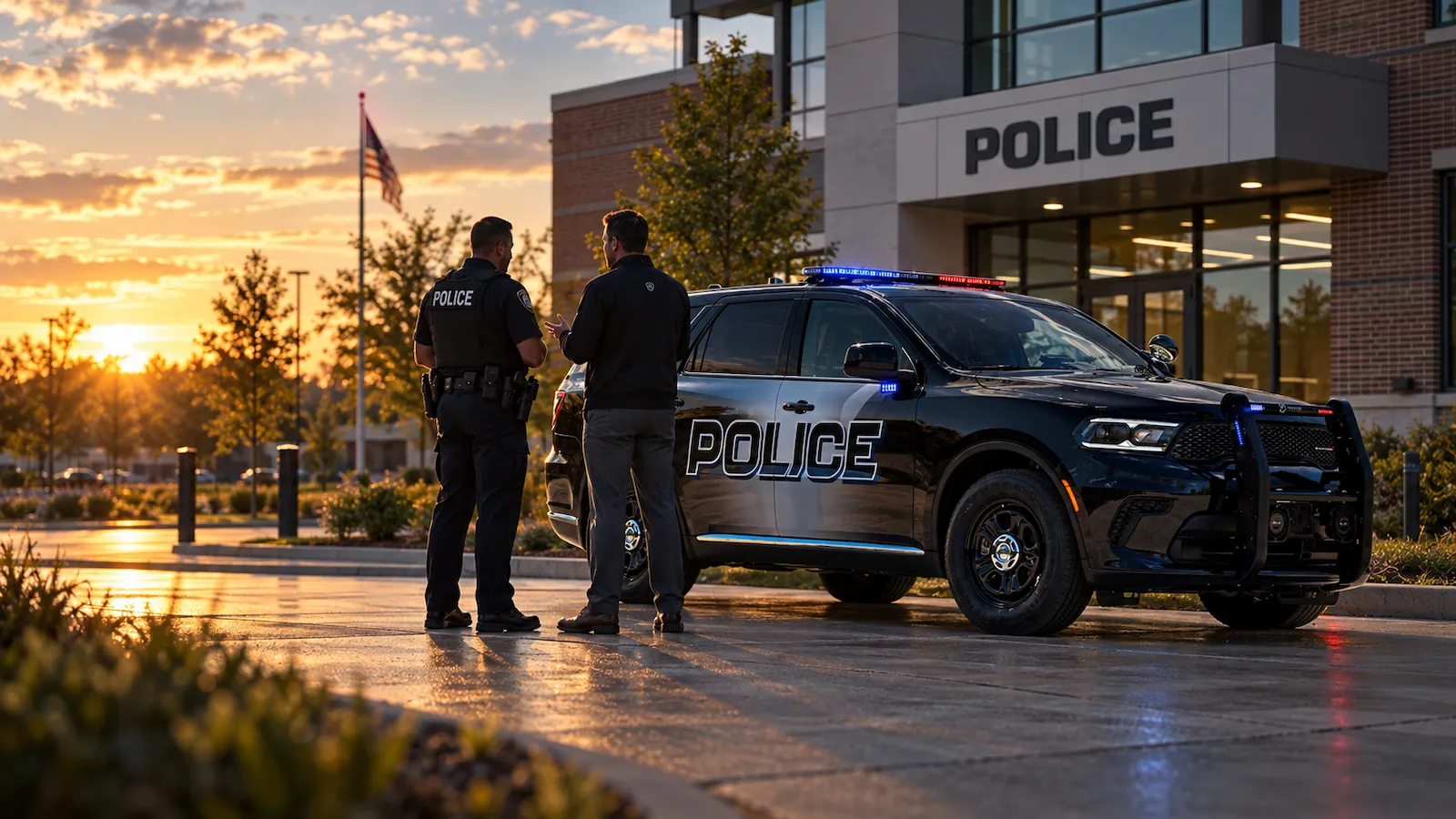
PLANNING YOUR NEXT BUILD
Let’s map the build sheet before the order lands.
Tell us what your fleet needs to do this year. We will plan the vehicles, equipment and timeline around it.