

The Cheapest Police Vehicle Isn’t the Lowest Cost
What looks like a better deal upfront can end up costing your department more—here’s why.
By Guardian Fleet Safety
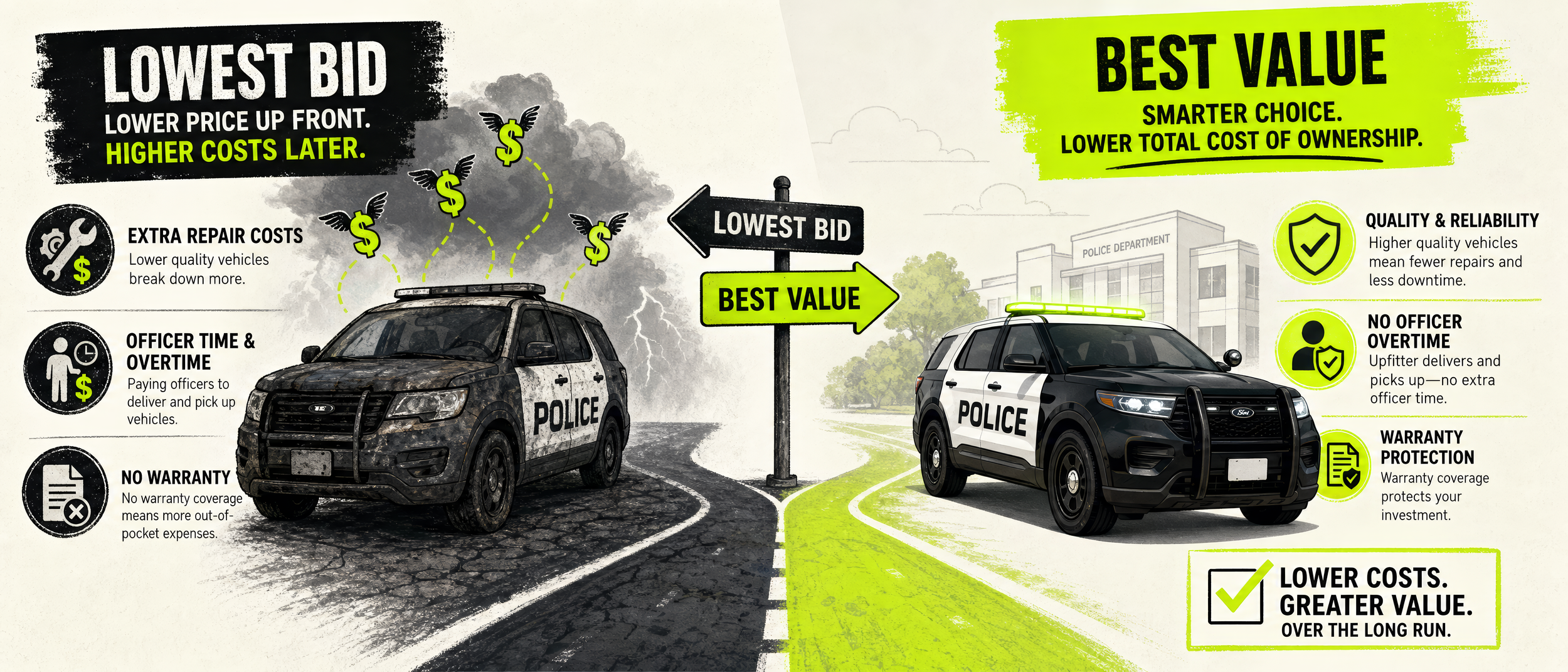
Most departments choose an upfitter the same way—they compare quotes and go with the lowest number.
On paper, that makes sense.
But that number doesn’t tell the whole story.
Because when it comes to police vehicle upfitting, the upfront price is only a small part of what your department actually pays.
WHAT GETS MISSED
Upfitting isn’t a commodity purchase.
It’s not just parts and installation—it’s a system that affects how your officers work every day.
It impacts:
How quickly vehicles get into service
How often they’re out of service
How easily officers can do their job
And how much time your team spends managing it all
Those things don’t show up in a quote.
But they show up later.
THE COSTS THAT DON’T SHOW UP
At first glance, one build might look cheaper.
But that number doesn’t include what happens after the vehicle leaves the shop.
1. Downtime Adds Up Fast
When a vehicle goes out of service—even for a short period—it creates real cost.
A conservative example:
10–30 hours of officer and staff time
Transport and coordination
Mileage and fuel
👉 That adds up to:
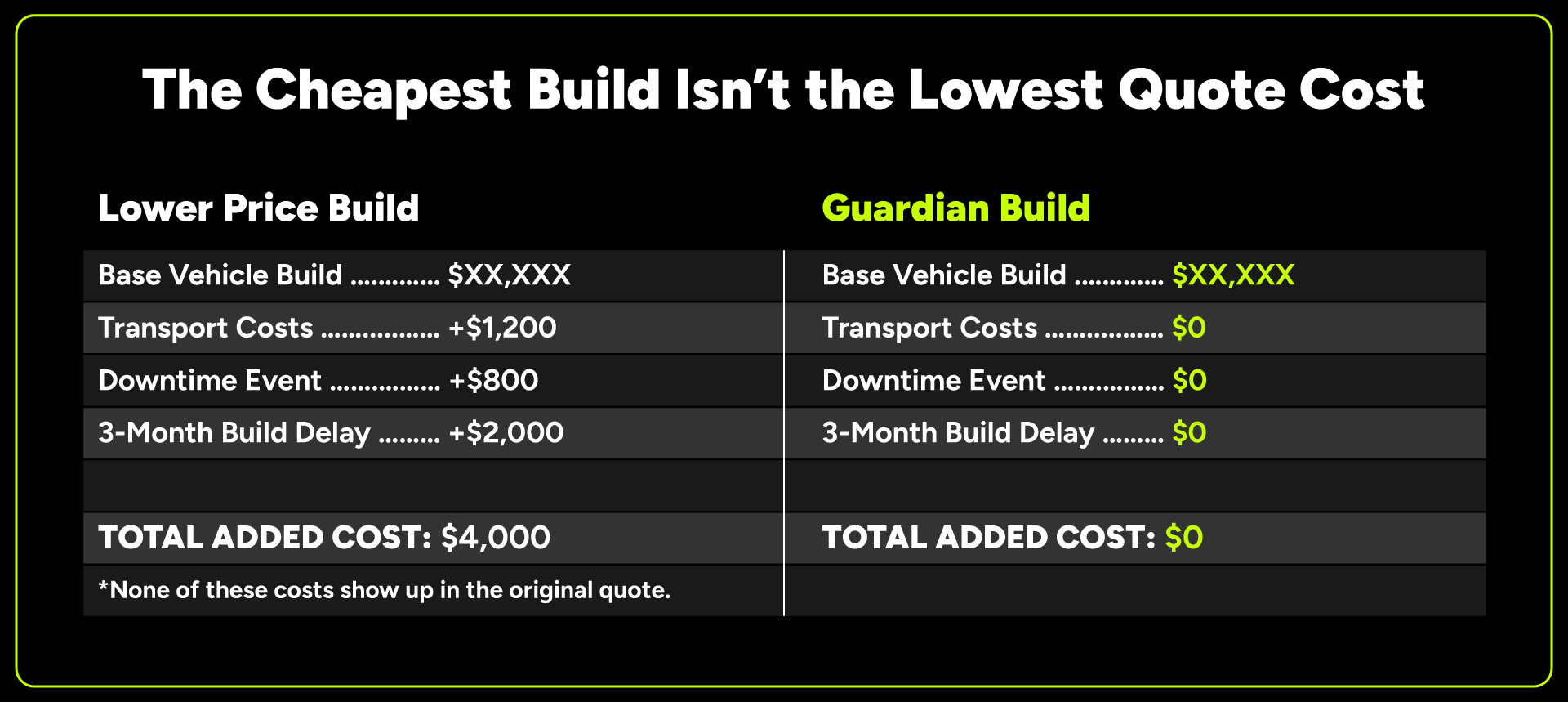
$500 – $1,300 per downtime event, per vehicle
And that’s just one event.
Over the life of a vehicle, it’s reasonable to expect 4–8 service-related downtime events.
👉 That becomes:
$2,000 – $10,400 per vehicle
2. Delays Cost More Than You Think
When a new vehicle isn’t ready, departments keep older ones on the road.
That means:
More maintenance
More miles
More wear and tear
Even short delays add up:
3-month delay: $1,400 – $2,700
6-month delay: $2,300 – $5,000
3. Multiply That Across a Fleet
Per vehicle:
👉 $6,000 – $8,000 in added cost is realistic
Across a 20-vehicle fleet:
👉 $120,000 – $160,000+ in added cost
A single delay or downtime event can erase any upfront savings—and then some.
THE SHIFT
The real question isn’t:
“Which quote is cheaper?”
It’s:
“Which option costs our department more over time?”
HOW GUARDIAN REDUCES THESE COSTS
At Guardian, everything we do is designed to remove the costs most departments don’t see coming.
Pickup & Delivery
We handle it.
No pulling officers off duty.
No scheduling headaches.
No hidden time cost.
Built by Former Officers
Our account reps have done the job.
That means:
No unnecessary equipment
No missed essentials
Builds that actually match real-world use
Faster Build Times
Vehicles get into service sooner.
Which means:
Less reliance on aging vehicles
Less overlap and added cost
One-Stop Shop
No juggling vendors.
One partner. One process.
Everything handled from start to finish.
Service That Comes to You
When something needs attention, we handle it.
Often on-site.
Which means:
Less downtime
Less disruption
Faster resolution
REALITY CHECK
Most of these costs don’t show up on a quote.
They show up later—spread across time, people, and budgets.
At first glance, one build might look cheaper.
But once you factor in:
Time
Delays
Downtime
Coordination
That “cheaper” option often ends up costing more.
FINAL THOUGHT
When a vehicle isn’t ready, it doesn’t just affect budgets.
It affects officers on the road.
CONCLUSION
The lowest bid might look better on day one.
But over the life of the vehicle, it’s often the most expensive decision you can make.
Guardian Fleet Safety is built around a different approach:
Not just building vehicles—
but reducing the total cost of owning and operating them.
CTA
If you’re evaluating your next build—or just want a second set of eyes on a quote—you’re already looking at…
We’d be happy to take a look and talk through it with you.